
Compare AC's Prices & Best Deals
Our air conditioning price comparison platform provides homeowners with a comprehensive, transparent solution for evaluating and selecting cooling systems.
By Type:
Our air conditioning price comparison platform provides homeowners with a comprehensive, transparent solution for evaluating and selecting cooling systems.
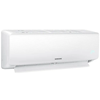

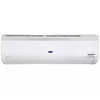
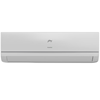
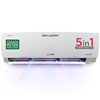
Quick tips to pick the best AC for your room, budget, and usage.
Answer: Comparing AC prices before buying can save you ₹3,000–₹15,000 on the exact same model. The same 1.5 ton Voltas or LG inverter AC is often listed at different prices across Amazon, Flipkart, and brand websites — sometimes on the same day. Beyond the sticker price, comparing helps you spot which retailer offers the better exchange bonus, extended warranty, or free installation deal, which can add another ₹2,000–₹5,000 in hidden value. AC prices also change frequently during seasonal sales like Amazon's Great Indian Festival or Flipkart's Big Billion Days, so checking live prices across platforms ensures you're not overpaying during a period when discounts are available elsewhere. ODeal updates prices daily so you always see the lowest available price before you decide.
Answer: A 1.5 ton AC price in India in 2026 ranges from ₹28,000 to ₹75,000 depending on the brand, type, and star rating. A basic 1.5 ton non-inverter split AC starts around ₹28,000–₹35,000, while a 5-star inverter model from premium brands like Daikin or LG can go up to ₹65,000–₹75,000. For a 1.5 ton window AC, prices begin at ₹25,000 — making it the most affordable option, though it requires an existing window slot for installation. Among inverter models, Godrej and Voltas offer the lowest entry price at ₹30,000–₹34,000, while Samsung and LG fall in the ₹38,000–₹55,000 range for comparable 3-star and 5-star variants. The 1.5 ton capacity is the most popular choice for Indian bedrooms and living rooms sized 120–180 sq. ft., and the sweet spot for most buyers is a 1.5 ton 5-star inverter AC in the ₹40,000–₹50,000 range — where energy savings over 3–5 years more than recover the higher upfront cost compared to a 3-star model.
Answer: Tonnage in an AC refers to its cooling capacity, not its physical weight. A 1 ton AC can remove 12,000 BTUs of heat per hour, a 1.5 ton removes 18,000 BTUs, and a 2 ton removes 24,000 BTUs — meaning a higher tonnage cools a larger room faster. Choosing the wrong tonnage is one of the most common and costly AC buying mistakes: an undersized AC runs continuously without cooling the room properly, driving up electricity bills, while an oversized AC short-cycles and fails to remove humidity, leaving the room feeling damp and uncomfortable.
As a practical guide for Indian homes — a 1 ton AC (price: ₹22,000–₹45,000) is ideal for small rooms up to 120 sq. ft. such as children's bedrooms or study rooms. A 1.5 ton AC (price: ₹28,000–₹75,000) suits rooms between 120–180 sq. ft. and is the most commonly purchased size in Indian households, covering most standard bedrooms and small living rooms. A 2 ton AC (price: ₹38,000–₹90,000) is best for large rooms of 180–250 sq. ft. such as master bedrooms, dining areas, or open living spaces.
Answer: A 1.5 ton window AC price in India starts at ₹25,000–₹32,000, making it ₹3,000–₹8,000 cheaper upfront than a comparable 1.5 ton split AC, which starts at ₹28,000 and goes up to ₹75,000 for premium 5-star inverter models. However, the lower window AC price comes with important trade-offs that most buyers underestimate before purchasing.
Window ACs are a single self-contained unit that fits into a wall or window opening, which limits them to older homes and buildings with existing window slots. They are noisier than split ACs since the compressor sits inside the same unit as the indoor fan, and they are generally available only in non-inverter variants in India, meaning higher monthly electricity bills compared to an inverter split AC of the same capacity. Installation is simpler and cheaper — typically ₹500–₹1,000 versus ₹1,500–₹3,000 for a split AC — but the long-term operating cost difference erases this saving within one summer season.
A split AC separates the compressor (outdoor unit) from the indoor unit, resulting in significantly quieter operation, better aesthetics, flexible placement in any room regardless of window position, and access to inverter technology that cuts electricity consumption by 30–50%. Most 5-star and inverter variants are only available in split AC form in India.
Answer: Portable AC price in India in ranges from ₹15,000 to ₹45,000 for 1–1.5 ton models, making them appear attractively priced compared to a split AC at first glance. However, the portable AC price tells only part of the story — what you pay in electricity bills over a single summer often makes them the most expensive cooling option in the long run.
Portable ACs require no permanent installation, no outdoor unit, and no wall drilling, which makes them appealing for rented apartments, server rooms, or spaces where a split AC installation is not permitted. They can be moved from room to room on castor wheels and only need a window or small vent opening to exhaust hot air. For these specific situations, a portable AC in the ₹20,000–₹35,000 range from brands like Voltas, Blue Star, or Lloyd is a practical solution.
The significant downside is efficiency. A 1.5 ton portable AC consumes 30–50% more electricity than a 1.5 ton 5-star inverter split AC of the same capacity, because the exhaust hose running to the window creates a negative pressure inside the room that constantly pulls in warm outside air. The result is an AC that works harder, cools less effectively, and costs significantly more to run — often ₹1,500–₹3,000 more per month in electricity during peak summer usage.
Answer: Yes, for most Indian households an inverter AC is absolutely worth the extra price — and the numbers make a compelling case. An inverter AC is typically priced ₹5,000–₹12,000 higher than a non-inverter model of the same brand, capacity, and star rating. However, that price gap closes faster than most buyers expect, often within a single cooling season.
The core difference lies in how the compressor works. A non-inverter AC operates like a simple on/off switch — the compressor runs at full speed until the room reaches the set temperature, then shuts off completely, then starts again when the temperature rises. This constant starting and stopping consumes large bursts of electricity and causes noticeable temperature fluctuations in the room. An inverter AC instead runs the compressor continuously but varies its speed — slowing down when the room is cool and speeding up when more cooling is needed. This variable-speed operation is significantly more energy efficient and maintains a steadier, more comfortable room temperature throughout the day.
In practical terms, a 1.5 ton 5-star inverter AC running 8 hours a day during Indian summers consumes roughly 1.2–1.4 units of electricity per hour compared to 1.5–1.8 units for a comparable non-inverter model. At an average Indian electricity tariff of ₹6–₹8 per unit, that translates to savings of ₹800–₹1,500 per month during peak summer — meaning the ₹8,000–₹12,000 price premium of the inverter AC pays itself back within one to two summers. Over a typical AC lifespan of 10–12 years, the total electricity savings can reach ₹40,000–₹80,000, making the inverter AC dramatically cheaper in the long run despite its higher sticker price.
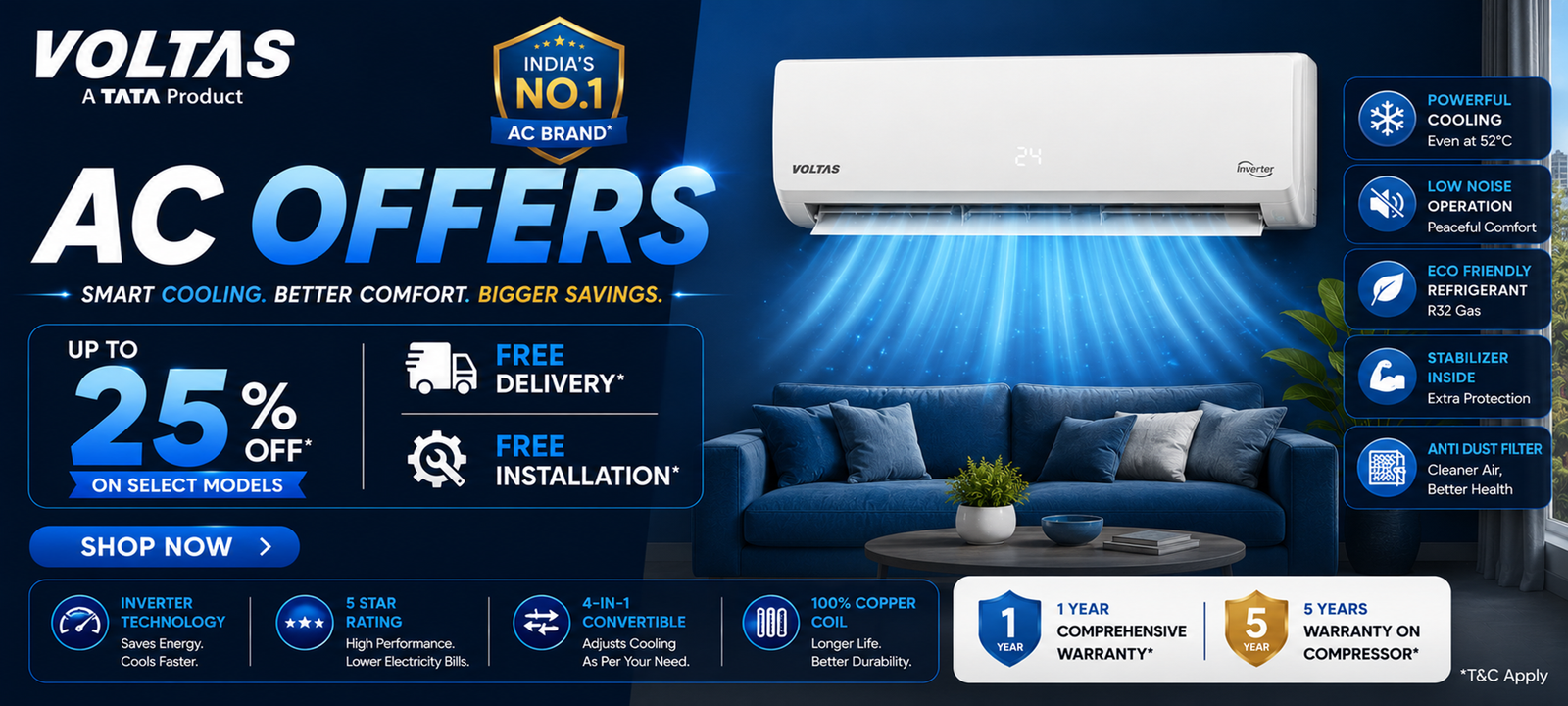
Answer: Voltas 1.5 ton AC price in India in 2026 ranges from ₹32,000 to ₹55,000 depending on the star rating, inverter technology, and specific model variant. Voltas is India's best-selling AC brand for over a decade running, with one of the widest service networks across Tier-1, Tier-2, and Tier-3 cities — making it a particularly reliable choice for buyers outside major metros where after-sales support matters as much as the product itself.
At the entry level, a Voltas 1.5 ton 3-star inverter split AC is priced between ₹32,000–₹42,000, with popular models like the Voltas 185V Vectra Elite sitting comfortably in this range. Stepping up to a Voltas 1.5 ton 5-star inverter split AC takes the price to ₹45,000–₹55,000, with models like the Voltas 185V Vectra Car offering high ISEER ratings and superior energy efficiency suited for long daily usage during Indian summers. Voltas also offers 1.5 ton window AC models starting at ₹26,000–₹32,000 for buyers looking for a lower upfront cost with basic cooling needs.
Compared to other brands at the same capacity, Voltas AC price sits in the mid-range — more affordable than LG, Daikin, and Samsung for comparable specifications, yet offering better cooling performance for Indian climatic conditions than most budget brands. Voltas ACs are specifically engineered for high ambient temperatures, making them particularly well-suited for cities like Delhi, Jaipur, Nagpur, and Hyderabad where summer temperatures regularly cross 42–45°C — conditions where many imported or internationally designed compressors begin to underperform.
Answer: LG 1.5 ton AC price in India in 2026 ranges from ₹38,000 to ₹72,000, making it moderately more expensive than Voltas across comparable models and star ratings. At the entry level, an LG 1.5 ton 3-star inverter split AC starts at ₹38,000–₹48,000, while LG's premium 1.5 ton 5-star dual inverter split AC models climb to ₹55,000–₹72,000 — a significant step up in price but also in technology and performance.The key differentiator in LG's pricing is its proprietary Dual Inverter Compressor, which uses a twin rotary mechanism instead of the single rotary compressor found in most other brands including Voltas. This dual inverter technology allows the compressor to operate across a wider range of speeds, resulting in faster cooling, lower noise levels, and better energy efficiency compared to a standard inverter compressor at the same star rating.
LG also includes a PM 2.5 air purification filter, humidity control, and an auto-cleaning function in most of its mid-to-premium models — features that are either absent or available only in higher-end Voltas variants.In a direct comparison at the ₹40,000–₹50,000 price range, LG and Voltas are the two most closely contested brands in India.
Voltas wins on upfront affordability, wider Tier-2 and Tier-3 city service coverage, and proven performance in extreme high-ambient temperature conditions above 45°C. LG wins on compressor technology, ISEER energy efficiency ratings, noise levels — typically 3–5 dB quieter than comparable Voltas models — and premium build quality that tends to hold up better over a 10–12 year lifespan.
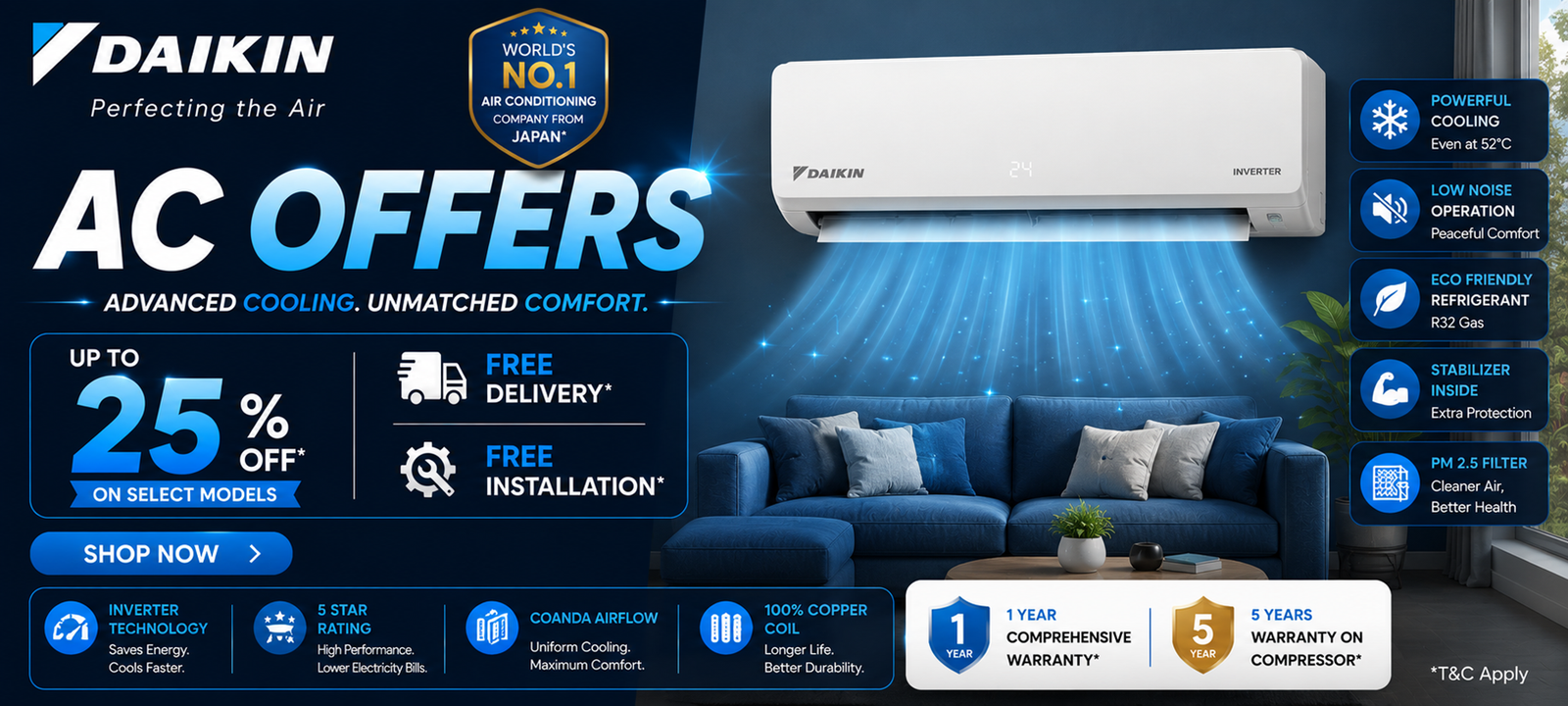
Answer: Daikin 1.5 ton AC price in India in 2026 ranges from ₹42,000 to ₹78,000, making it one of the most premium-priced AC brands available in the Indian market. At first glance, paying ₹8,000–₹15,000 more than a comparable Voltas or LG model for what appears to be similar cooling capacity can feel hard to justify. However, Daikin's higher price reflects a fundamentally different engineering philosophy — one that prioritises compressor longevity, operational silence, and long-term energy efficiency over feature count or upfront affordability.
The heart of Daikin's premium pricing is its Japanese-engineered inverter compressor, which is widely regarded as the most durable and reliable compressor available in the Indian residential AC market. While most brands source compressors from third-party manufacturers, Daikin designs and manufactures its own compressors in-house — a distinction that directly translates into longer operational life, typically 10–15 years compared to 7–10 years for most competing brands. Daikin compressors also operate at exceptionally low noise levels of 19–21 dB, making them among the quietest ACs available in India — a meaningful advantage for light sleepers and bedroom installations where noise is a genuine concern.
On energy efficiency, Daikin consistently delivers some of the highest ISEER ratings in the industry across its 5-star inverter lineup, resulting in electricity consumption that is measurably lower than most competing brands at the same star rating. For a household running a 1.5 ton AC 8–10 hours daily through Indian summers, this efficiency advantage can translate to ₹500–₹1,200 additional savings per month compared to a 5-star model from a mid-range brand — further narrowing the effective price gap over a 5–10 year ownership period.
Answer: Samsung 1.5 ton AC price in India in 2026 ranges from ₹36,000 to ₹68,000, positioning it firmly in the mid-to-premium segment alongside LG and just below Daikin. At the entry level, a Samsung 1.5 ton 3-star inverter split AC starts at ₹36,000–₹46,000, while the premium 1.5 ton 5-star WindFree inverter models climb to ₹52,000–₹68,000. Across all price points, Samsung consistently offers one of the strongest feature sets per rupee in the Indian AC market — making it the go-to choice for tech-forward buyers who want smart home integration, advanced airflow technology, and premium build quality without crossing into Daikin's price territory.
The single most distinctive feature that sets Samsung apart from every other brand in India is its WindFree cooling technology, available in select mid-to-premium models in the ₹48,000–₹68,000 range. Unlike conventional ACs that blast cold air directly from the indoor unit — creating an uncomfortable draft that many users find unpleasant during extended periods of use — Samsung's WindFree models disperse cooled air through 23,000 micro-holes across the front panel, creating what Samsung calls "still air" cooling. The room reaches the desired temperature without any direct airflow hitting occupants, resulting in a significantly more comfortable experience for families, elderly users, and anyone sensitive to cold air blowing directly on them. This is a genuinely unique differentiator that no other major brand in India offers at a comparable price point.
Beyond WindFree, Samsung 1.5 ton ACs stand out for their deep smart home integration through the SmartThings app, which allows users to control the AC remotely, set schedules, monitor energy consumption in real time, and integrate with other Samsung smart home devices — all from a single app. This level of ecosystem integration is more polished and comprehensive than the Wi-Fi control offerings from Voltas, Blue Star, or even Carrier at similar price points. Samsung also includes a Fast Cooling mode that drops room temperature rapidly within the first few minutes of operation — particularly useful in Indian summers where rooms heat up significantly during the day and need to be cooled quickly upon returning home.On the compressor front, Samsung uses its own Digital Inverter technology, which the brand claims offers superior durability backed by a 10-year compressor warranty on most models — one of the longest in the industry and comparable to Daikin's warranty commitment.
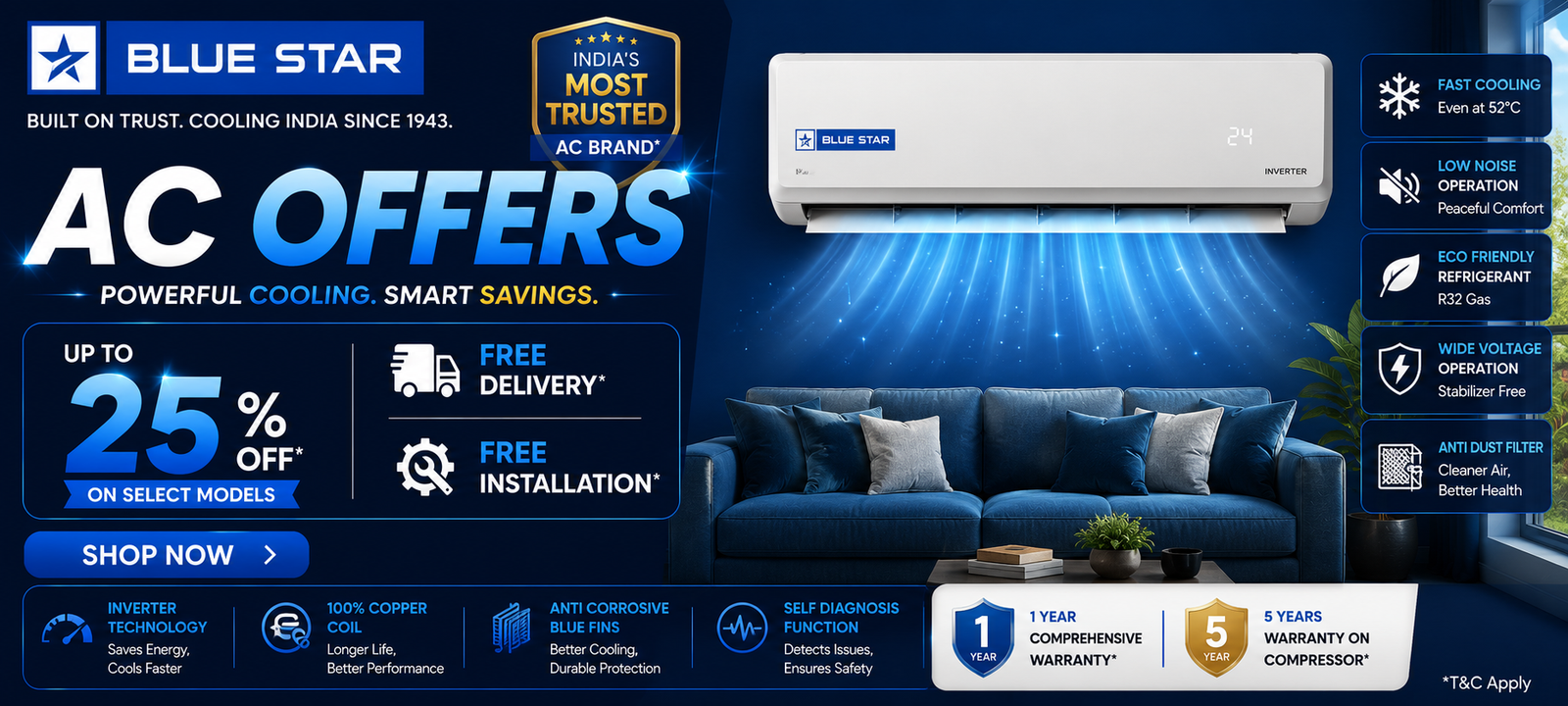
Answer: Blue Star 1.5 ton AC price in India in 2026 ranges from ₹34,000 to ₹60,000, positioning it squarely between Voltas and LG across comparable models and star ratings. At the entry level, a Blue Star 1.5 ton 3-star inverter split AC starts at ₹34,000–₹42,000, while the premium 1.5 ton 5-star inverter models climb to ₹48,000–₹60,000. This pricing places Blue Star as a genuine mid-range contender — more affordable than LG and Samsung for equivalent specifications, yet meaningfully more capable than budget brands, and within striking distance of Voltas while offering a distinctly different set of strengths that make it the superior choice for specific buyer profiles and geographies.Blue Star is India's second-largest commercial AC manufacturer, with over 75 years of experience designing and manufacturing cooling solutions for hospitals, hotels, data centres, and commercial buildings — an industrial pedigree that directly informs the build quality and engineering precision of its residential lineup. Unlike Voltas, which built its reputation primarily in the residential mass market, or LG, which approaches AC as one of many consumer electronics categories, Blue Star's entire business identity is rooted in cooling technology. This specialisation shows in the durability and consistency of its residential ACs, which are engineered with the same attention to thermal performance and long-term reliability as its commercial products.
The area where Blue Star most decisively outperforms both Voltas and LG is in high-humidity coastal environments. Blue Star specifically engineers its residential AC lineup with anti-corrosive blue fin coated condensers and evaporators that resist salt air corrosion far more effectively than standard copper or aluminium fin designs used by most competitors. For buyers in Mumbai, Chennai, Kochi, Goa, Visakhapatnam, and other coastal cities where salt-laden humid air aggressively corrodes standard AC components — often causing fin corrosion and refrigerant leaks within 3–5 years — Blue Star's blue fin technology extends the effective operational life of the outdoor unit by several years.
In these geographies, paying Blue Star's slight price premium over Voltas is not just justified but financially prudent, as it avoids expensive condenser replacements and refrigerant recharging costs that coastal Voltas users frequently encounter within the first five years of ownership.
Answer: Among established and reliable brands, Godrej and Voltas offer the lowest 1.5 ton AC prices in India in 2026, with inverter models starting at ₹30,000–₹34,000 respectively. However, if budget is the primary consideration, a broader set of brands deserve serious evaluation — each occupying a distinct position on the price-versus-reliability spectrum that significantly affects the true cost of ownership beyond the sticker price.
At the absolute entry level, brands like MarQ, Sansui, Akai, BPL, and Croma offer 1.5 ton split ACs starting at ₹22,000–₹28,000 — making them the cheapest options available in the Indian market by a meaningful margin. MarQ, Flipkart's in-house appliance brand, and Croma, Tata's retail brand, both offer decent basic cooling at very low prices and are backed by their respective parent company's service infrastructure, giving them a reliability edge over lesser-known generic brands in the same price range. However, these ultra-budget options typically come with non-inverter compressors, lower star ratings, and limited warranty coverage — meaning higher monthly electricity bills, shorter compressor lifespan, and higher long-term servicing costs that can easily erase the upfront savings within two to three years of regular summer usage.
Stepping up slightly, Carrier and Lloyd offer 1.5 ton inverter split ACs in the ₹28,000–₹36,000 range — making them the most affordable inverter options from brands with genuinely credible engineering heritage. Carrier is a century-old American cooling brand with strong commercial AC credentials and a growing Indian residential presence, while Lloyd is owned by Havells, one of India's most respected electrical manufacturers with an extensive pan-India service network. Both brands deliver reliable inverter performance, reasonable energy efficiency, and adequate after-sales support at prices that undercut Voltas and Godrej — making them the most compelling choice for budget-conscious buyers who still want inverter technology without stretching to the ₹34,000–₹40,000 range.
Answer: Understanding how major brands are priced relative to each other is one of the most useful starting points for any AC buying decision — it immediately clarifies which brands fit your budget and which offer the best value within each price segment. Here is a comprehensive brand-wise price comparison for 1.5 ton inverter split ACs in India in 2026, organised from most affordable to most premium.
The single most important takeaway from this comparison is that the ₹40,000–₹55,000 mid-range segment — where Voltas, Blue Star, Samsung, and LG all compete closely — offers the best overall value in the entire Indian AC market in 2026. Buyers in this range get genuine 5-star inverter efficiency, credible brand warranties, strong service networks, and meaningful smart features without crossing into the premium pricing of Daikin, O General, or Mitsubishi. For most Indian households, choosing any of the four leading mid-range brands at this price point and matching the specific brand to your city, climate, and feature priorities — using the guidance above — will result in a purchase that delivers outstanding value, comfort, and reliability for a decade or more.
Answer: The best time to buy a 1.5 ton AC at the lowest price is between October and February (off-season). During this period, brands like Voltas, LG, Daikin, and Blue Star offer discounts of 10–20% on split AC price, window AC price, and inverter AC price. Flipkart's Big Billion Days (October) and Amazon's Great Indian Festival also offer significant discounts on 1.5 ton AC prices across all major brands. Avoiding summer (March–June) purchases can save you ₹3,000–₹8,000 depending on the model.
Answer: Yes, each additional star rating on a 1.5 ton AC increases the price by approximately ₹4,000–₹8,000. A 3-star Voltas 1.5 ton inverter AC is priced around ₹36,000, while the 5-star variant costs ₹48,000 — a difference of ₹12,000. However, a 5-star inverter AC consumes roughly 8–12% less electricity than a 3-star model. Given Indian summer usage patterns (6–10 hours/day for 5–6 months), the 5-star model typically recovers the price difference within 3–4 years through electricity savings. inverter ac price1.5 ton ac pricevoltas price